
Stablecoins and Crypto Payments: Real Opportunity or Overhyped Trend?
Stablecoins and Crypto Payments: Real Opportunity or Overhyped Trend?
24/07/25, 11:00
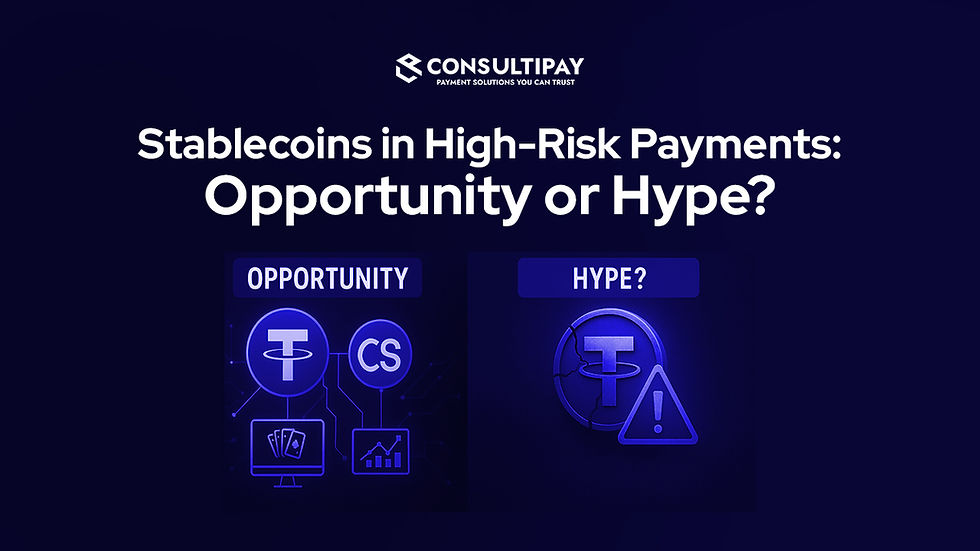
The payment landscape for high-risk industries such as iGaming, forex, and digital content is evolving rapidly. As businesses search for faster settlements, lower costs, and global reach, stablecoins and crypto payouts are emerging as a serious alternative to traditional banking. But is this shift truly a long-term opportunity or just an overhyped trend?
This blog takes a practical look at how crypto is reshaping high-risk transactions and the regulatory risks every business should consider before making the switch.
Why Stablecoins Are Gaining Traction in High-Risk Transactions
1. Faster Global Settlements
Traditional cross-border payments often involve multiple intermediaries, delayed settlements, and high fees. Stablecoins like USDT (Tether) and USDC offer near-instant transfers, making them attractive for industries where speed and cash flow are critical.
2. Lower Processing Costs
Payment service providers (PSPs) typically charge high MDRs (merchant discount rates) for high-risk businesses. Stablecoin transactions can reduce intermediary fees, especially for B2B settlements.
3. Access to Unbanked or Underserved Markets
In regions with strict banking restrictions or limited PSP options, crypto offers a way for businesses to bypass banking barriers while still maintaining liquidity in USD-pegged assets.
4. Reduced Chargeback Risks
Unlike card-based payments, crypto transactions are irreversible, eliminating costly chargeback disputes which is a huge advantage for high-risk verticals.
The Regulatory and Operational Risks to Consider
While the benefits are clear, businesses cannot ignore the challenges:
1. Unclear Global Regulations
Regulatory frameworks differ widely.
The U.S. has taken a conservative stance, with the GENIUS Act enforcing strict 1:1 backing requirements for stablecoins.
Europe, under MiCA, is pushing for wider stablecoin use, giving EU-based PSPs a first-mover advantage in cross-border transactions.
Businesses operating globally need to navigate jurisdictional inconsistencies carefully.
2. Banking Relationships Still Matter
Most high-risk businesses still rely on hybrid models, settling with stablecoins but converting to fiat for payroll, taxes, and licensing requirements. PSPs that can manage seamless fiat-crypto integration will dominate this space.
3. Volatility and Counterparty Risk
While stablecoins are pegged to fiat, issuer transparency and reserve management remain concerns. The collapse of TerraUSD (UST) in 2022 is a reminder that not all “stable” coins are truly stable.
4. Compliance and AML Requirements
Crypto payouts do not exempt businesses from KYC and AML obligations. Regulators are tightening rules to prevent money laundering and sanction evasion, meaning due diligence on crypto PSPs is critical.
So, Opportunity or Overhyped Trend?
For high-risk industries, stablecoins are less of a trend and more of a strategic tool if implemented correctly. Businesses that partner with PSPs offering regulated crypto settlement options can:
✔️ Expand to new markets faster
✔️ Lower processing costs
✔️ Mitigate chargeback losses
However, those ignoring regulatory compliance, banking integration, and PSP vetting risk serious financial and legal exposure.
The future is not “crypto vs. traditional payments.” It is about choosing the right mix of fiat and crypto solutions based on regional regulations and operational needs.
Final Thoughts
At ConsultiPay, we help high-risk businesses navigate the complex world of PSPs, stablecoin settlements, and crypto payouts by connecting them only with vetted, compliant providers that suit their regional and industry needs.
Need guidance on crypto-friendly PSPs?
Get in touch with us today and explore tailored solutions for your business.